coaching
Identity
Life transitions
Life Is a Series of Rupture(s)

When we talk about ruptures, whether painful or conflictual, we usually think of breakups or the end of a contract.
But the concept is much broader than that.
There was a period in my life when everything felt like it was falling apart at once.
The story I was telling myself was that I was about to be laid off, was struggling with my relationship with my body, wasn’t loved romantically, was being taken advantage of by my friends, and was losing my connection with my family after living away for so long.
So I started questioning a lot of things I had thought were settled.
There were so many things happening in such a short window that I felt completely in between.

1. I was floating.
I was not the person I had been. Not yet the person I was becoming.
I was moving from one place to another, seeing people, having conversations—but never truly present in any of them.
I especially remember one weekend at my parents’ house.
I was pretending everything was fine, telling everyone:
“I just got a great layoff package. I can do whatever I want.”
I was disconnected from my emotions, disconnected from my own words, disconnected from the food I ate.
The noise in my head was constant.
After days of pretending, I escaped to a library. There, I found a book called Rupture(s) by Claire Marin.
I started crying.
I went back to my parents’ house and said: “I don’t know who I am.”
It was the first time I had ever been truly vulnerable with them.
That book, by the philosopher Claire Marin, helped me understand what was happening.
2. When Does a Rupture Happen?
There are two kinds of ruptures.
Interpersonal ruptures occur when a relationship with someone else becomes unsustainable — whether in a romantic, family, or professional context. The break happens when one or both people realize that the relationship has become harmful or threatens their well-being.
Internal ruptures happen when we no longer recognize ourselves. When we feel disconnected from who we truly are, drift away from happiness, and deeply long for change.
Ruptures can be positive or negative, and life’s most powerful ruptures are often triggered by:
divorce, the birth of a child, a romantic breakup
moving abroad, expatriation,
illness, accidents, the death of someone we love,
losing a job, retirement.
I also believe that powerful encounters can create ruptures as meeting a mentor, discovering faith, or crossing paths with someone who profoundly changes the way we see ourselves.
Not every change creates a deep rupture: Sometimes it simply transforms the way we relate to life.
Elisabeth Kübler-Ross’s model describes grief and acceptance as a process made up of several stages.
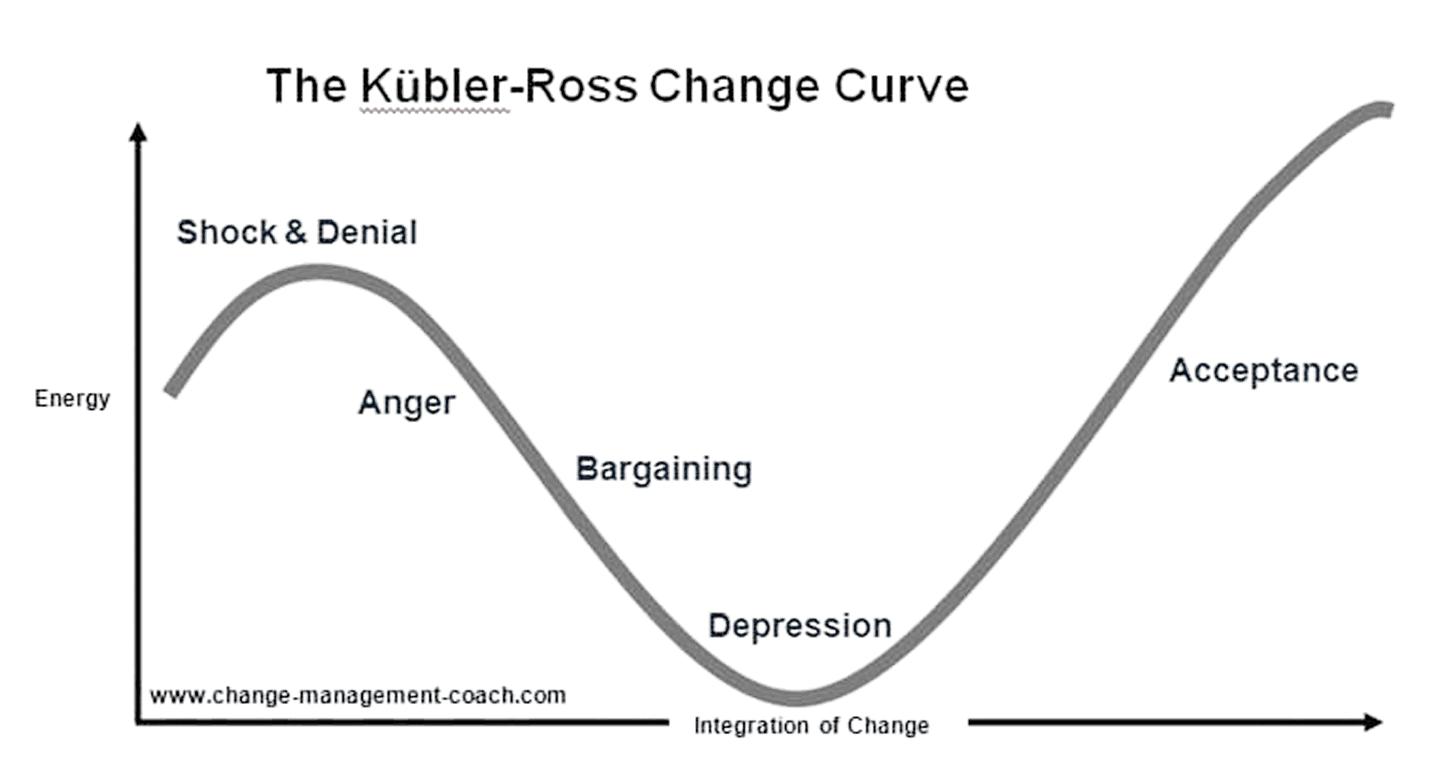
I believe a rupture occurs once we acknowledge and integrate the reality of the change.
3. Ruptures Fragment Us
Claire Marin’s perspective helped me understand why certain life events affect us so deeply.
One sentence in particular stayed with me:
“A true rupture fragments us because we used to define ourselves through the qualities — or flaws — that someone else attributed to us.”
In our professional lives, our position, responsibilities, and title often become our identity.
After asking someone, “What’s your name?”, the next question is almost always, “So, what do you do?”
That question suddenly becomes uncomfortable when you’ve been laid off or retired.
Who are you if you’re no longer “Marketing Director.”?
The same thing happens in relationships.
People who have been repeatedly devalued—by a parent, a partner, or a friend—may come to believe that this is who they are.
Unfortunately, this is one of the mechanisms manipulative people often use.
On the other hand, leaving a relationship where we feel admired or appreciated can be equally difficult, because we often define our own worth through someone else’s perception of us.
The same dynamic exists in the relationship we have with ourselves: Addiction, psychological disorders, or self-destructive behaviors often become identities rather than experiences.
These become vicious circles that are incredibly difficult to escape.
4. An Opportunity to Redefine Ourselves
What I appreciate most about Claire Marin’s perspective is that she sees every rupture as an opportunity to redefine ourselves.
Like adolescence, periods of transition often push us toward extremes before we gradually discover who we are becoming.
Throughout my own journey, I first redefined the areas where I already felt confident, starting with my professional goals.
For everything else, I met incredible coaches, life mentors, and discovered books that helped me lay everything on the table, put each piece back in its place, and, with time and intention, embrace the process.
Some ruptures change us forever.
But I believe that seeing life as a succession of ruptures—both joyful and painful—helps us appreciate the good moments more deeply while facing difficult ones with greater serenity.
It frees us from the pressure of making the “perfect” decision.
We stop viewing life through the lens of success or failure and begin to see every experience as part of the path that shaped who we have become.
We become more compassionate toward our past, more intentional about the people we choose to surround ourselves with, and perhaps, for the first time, we truly begin to enjoy the journey.
P.D: To everyone who has been there for me, I have no words to say thank you.
If you don’t know me yet, I’m Marine. I’m an ICF-certified coach and certified in Points of You®, working with people navigating life transitions. I help them reconnect with who they are, redefine their identity, and build meaningful projects through personal branding, marketing, and storytelling.