Coaching
Trends
Marketing
Will AI replace coaches? Conversational apps, the new spin-off from personal brands

Americans are fascinating.
I am fascinated by their shows, their ability to simplify messages, and their knack for pushing us to move with phrases that, I know, could be designed for anyone.
And on a personal brand level, I am fascinated by profiles like Peter Crone, Mel Robbins, or Tony Robbins: videos, podcasts, books, Instagram, reality shows… they are everywhere.
So when I saw that Tony Robbins had just launched his own AI for $1, I wanted to try it.
And honestly, the experience left me thinking much more than I expected.
1. The experience: a fast, intense conversation designed to activate
The first thing that catches your attention is the pace. As I had already experienced with other AIs, there are no silences or awkward pauses: everything is extremely fast.
The conversation starts without context, without a contract, or a deep exploration of your goal. Just bring a challenge. In less than ten minutes, the topic was wrapped up.
In parallel, I tried something similar with my own AI. I asked it to act as Tony Robbins, drawing inspiration from his books, interviews, and videos, to see to what extent it could replicate his way of coaching.
The result was different: extremely long, inspirational texts, but very few truly powerful questions.
And here lies the difference: the experience. On Tony Robbins' app, you can write, dictate messages, or even make a call. Because although you rationally know you are talking to an AI, the psychological feeling changes when you hear a voice responding to you in real time.
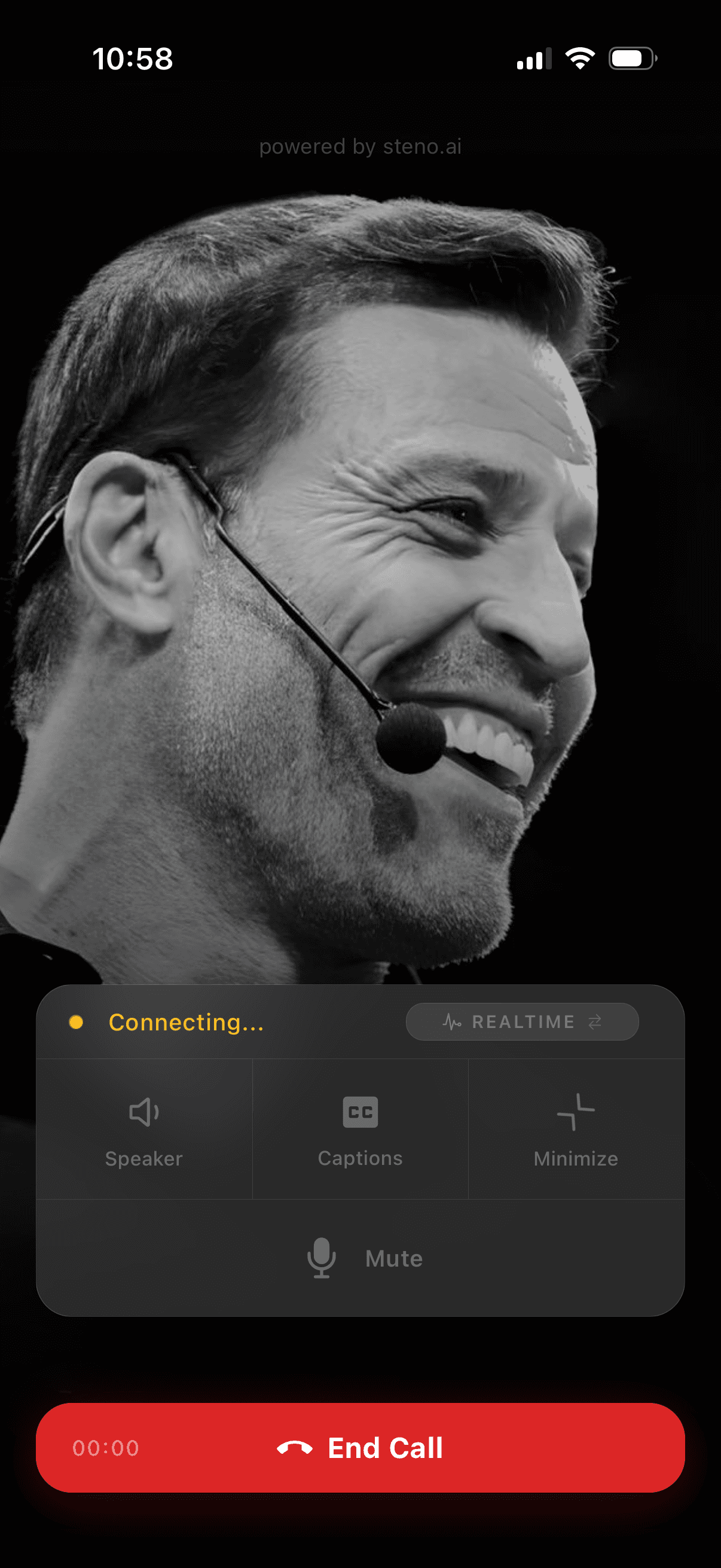
Therein lies one of the big differences between using an AI that simply feeds on data and living an experience designed around a personal brand and emotional interaction.
And all of that helped me understand the product. Because it is not a coaching process as such. It is a mental "quick fix", a little push, as if I were one of those people Tony Robbins brings onto the stage to do a quick session in front of thousands.
2. Is this coaching?
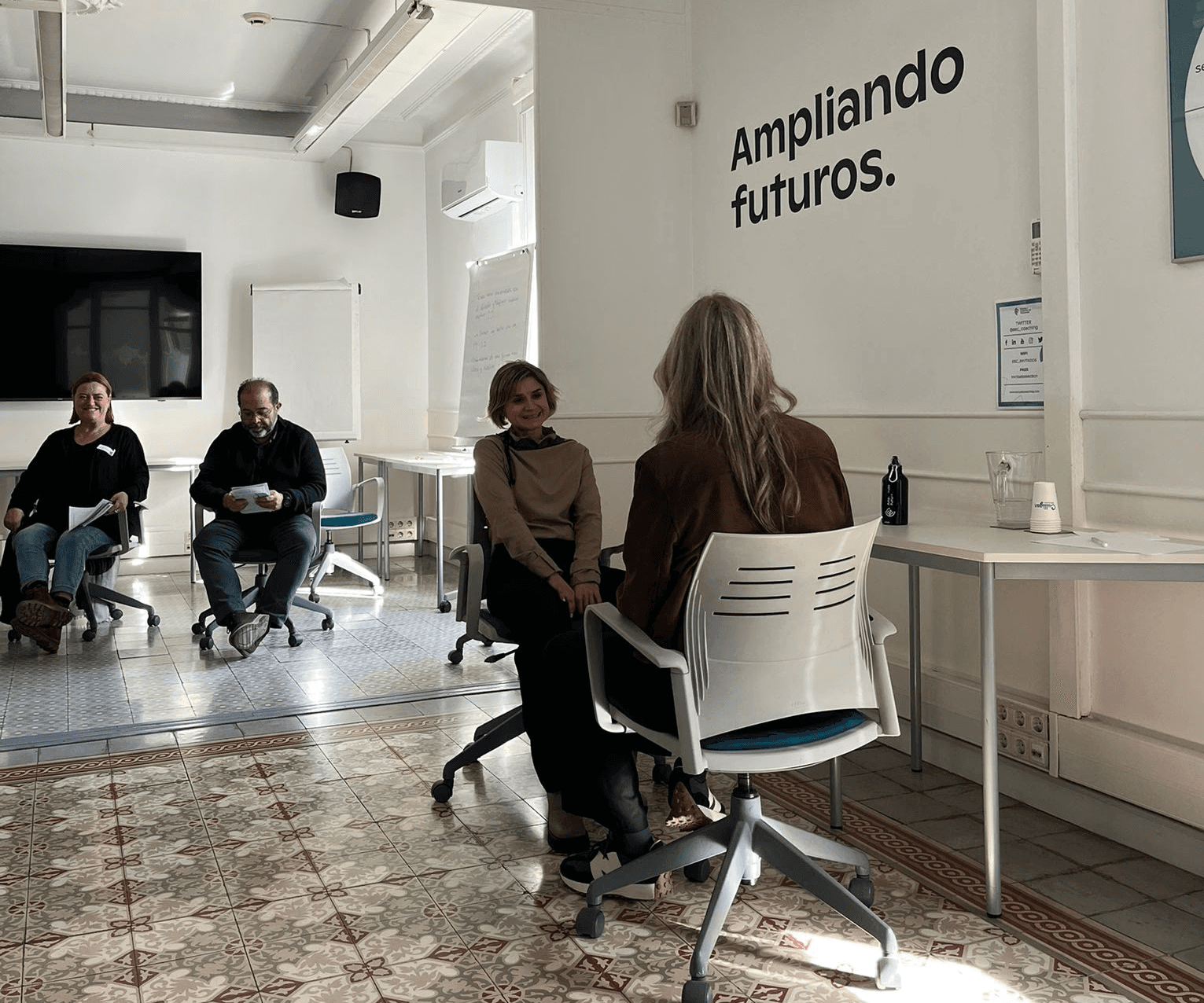
There is no doubt: this is not a true human coaching process.
And in case there were any doubts, we return to the core competencies of a coach according to the International Coaching Federation (ICF), among others:
demonstrates ethical practice (such as recognizing when coaching is not the appropriate support).
establishes and maintains agreements.
cultivates trust and safety
maintains presence
listens actively
evokes awareness in the client
And many other things that involve:
holding silences and processes of reflection
sensing emotions and energy shifts
detecting invisible bodily contradictions
intuiting when someone is avoiding an important topic
The ICF framework is designed for human coaching relationships, not simply for motivational guidance or advice.
Anyone who has lived through a true coaching process knows that transformation often happens precisely there. In intuition, presence, and in the coachee's commitment: to the person, to the process, to the price, to the appointment, and the time they are going to dedicate to it.
Something that doesn't happen with an app that can be closed as soon as the conversation gets uncomfortable.
On his website, Tony Robbins himself makes the distinction clear: coaching is done by coaches trained in his method, whereas his application offers "guidance," a guided conversation with constant interaction.
And it is good that it is this way. Perhaps the mistake is wanting to compare both experiences as if they were the same product.
Because they are not.
3. A fantastic derivative product for marketing and personal branding
Now then… imagine being your client's first reflex?
Today many people have become almost "addicted" to their AI. Imagine if that voice were yours. Being on their apps' home screen. Entering their life to the point where they call you whenever they have any problem.
I am not revolutionizing current thinking on AI if I say that the future will be AI + humans, and not AI vs humans.
And yes, I see personal AIs as a derivative product of coaching. Just as today a coach can have a book, an online course, a newsletter, or a community, tomorrow they will have an AI trained with their methodology and their way of thinking. A huge step in the emotional connection between a personal brand and its audience.
(And I won't get into the ethical issue of creating emotional dependency here, because that is a whole other story).
4. New opportunities and personal brand
With such a low barrier to entry for creating a product, possibilities open up in terms of business model, offer, and positioning.
I don't want to consider 100% AI-first coaches, because they would fall more into the category of content creators and systems than coaches in the classic sense.
But we can think of a new service portfolio like this:
Entry-level product (100% self-served): Assisted AI, books, online courses. Your vision, your methodology, but without human interaction. Your long-term product that sells without you being there.
Your cash cow (hybrid product): Human coaching and consulting for the deep and strategic part, with the AI accompanying between sessions: follow-up, questions, exercises, momentum.
Premium product (100% human and in-person): Retreats, multi-day masterminds, "incubator" style programs.
5. Being true to your mission without losing your value
It is confirmed once again: the premium experience of tomorrow lies in the human element, in what cannot be copied or reproduced with all the technology in the world: our time.
What I like most about relying on technology is that it solves a dilemma I hear constantly from coaches: lowering prices out of a "calling to serve," to "be affordable," to "want to help." With a product like this, you already have that affordable version within reach of many, and you can continue to defend your rates to dedicate quality time to the rest of your clients.
Whether you are in favor of these tools or not, personal branding is going to be even more important in the coming years.
Which field are you in? What do you stand for? What makes you different?
Because people will no longer buy just "coaching." They buy a person with a vision, an identity, and a presence.
Whether you decide to communicate it digitally or in person.
P.S. If you don't know me, I am Marine, creator of Lafacette. I am a coach, mentor, and I manage a brand creation and personal marketing agency between Barcelona and France.
If you are not yet at the stage of creating your own AI, but you want to start structuring your business and improving its communication to attract better clients, take a look here