coaching
change management
identity
Growth, Degrowth, and Conscious Integration: The Phases of Personal Change
Like a lot of people in tech, start-ups, and entrepreneurship, I’ve experienced a lot of pressure, and almost burnout at work.
I say “almost” because I’ve seen people going through actual burnout: they fall into depression and their body literally stops working so, I’d like to choose the right word, and I’d say burn-in: the stage right before
I think I was exactly the kind of person who was an easy target for it: ambitious, adventurous, and heavily dependent on my professional status to measure my self-worth.
Today, I happily feel like I'm in another phase and I wanted to look back at the journey and the different phases many of us go through, so that anyone building something can recognize where they are in the process.
I like to think of it as the end of a diet: first, you were eating too much; then you started restricting yourself; and finally, you (re)learn how to make conscious food choices without guilt or dependence.
And maybe it can help you answer one simple question:
Where Am I right now ? Do I need to grow? Do I need to let go? Or do I need to build something more aligned?
1. Personal Growth asks, "How can I become better?"
Growth is the default operating system for ambitious people. You add a new skill, you look for ways to improve your performance.
At some point in my career, I wanted more experiences, more challenges.
It's generally a holistic way of thinking. You build healthy routines, you listen to personal development podcasts, you track your steps, you track your tasks. You try to get the most out of your food, your time, and even your relationships.
You optimize to become the best version of yourself.
Maybe you run your own company and you're constantly thinking about more customers, more services, more channels.
Marian Rojas Estapé, one of the most influential voices on personal development in Spain, often talks about training our minds the way we'd train a muscle so we can become the best version of ourselves.
Growth, at its best, is exactly that: momentum that compounds over time.
The upside is real. You perform better, you expand, you genuinely become someone new. But when growth is taken to the extreme, everything becomes something to optimize. More tasks, more services, more relationships, more discipline, always chasing the next improvement before you've even integrated the last one.
I personally feel that growth without self-esteem or a balanced life becomes a hamster wheel because it gradually becomes your identity.
Your happiness becomes dependent on the next promotion, the better body, the better performance, the next achievement.
And here's the nuance I keep coming back to: even if our pursuit of growth was intentional, it wasn't always conscious.
Because most of us weren't growing toward something; we were growing away from something: the fear of not being enough. The choice itself was conscious, but the mechanism driving that choice rarely was.
It's a never-ending marathon.
2. Personal Degrowth asks “What can I let go of?”
Degrowth is another interesting approach.
It's not the opposite of growth; it's simply answering a different question. Instead of asking what else you could do to make your life feel fuller, you begin asking what you could finally stop doing.
Fabrice Midal has built an entire body of work around this idea: that the relentless pressure to keep improving ourselves is often the very thing exhausting us, and that real peace comes from stopping the fight against who we already are.
We often romanticize this phase as an Eat, Pray, Love moment, as if you had to quit everything and move to Bali. In reality, it rarely looks like that. It's usually a much quieter, and much longer, process.
That's the moment when you begin asking yourself:
What do I no longer want to keep doing?
Who no longer fulfills me?
What no longer feels like me?
What am I trying to prove, and to whom?
Which parts of my identity did I choose, and which ones did I inherit?
It's about meeting yourself without labels and letting go of everything you thought was part of your identity.
The upside is peace and quiet: You stop carrying what was never yours to carry in the first place.
But when degrowth is taken to the extreme, you can end up letting go of too much. You abandon parts of yourself you genuinely loved: the way you showed up, a project, an ambition, even an entire chapter of your identity, mistaking exhaustion for clarity.
That happened to me with fashion. When I closed my brand and started coaching school, I unconsciously rejected that part of myself. I thought I had to leave it behind in order to embrace a different industry and live more in line with my values.
And that's when degrowth stopped being peace and became abandonment.
3. Conscious Integration asks, "How do I live in alignment?"
This is the phase that some coaches are starting to call the conscious era. It isn't a hack; it's a way of being.
Making conscious choices starts to look different.
You stop looking for a better position and start looking for work that feels meaningful.
You stop chasing more clients and instead focus on offering better services to clients who genuinely value what you do.
You stop looking for more relationships and begin cultivating fewer, deeper, more authentic ones that give you the conversations you truly need.
You stop adding more weight to the bar or more workouts to your schedule, and instead choose movement that fits where you are in your life.
You stop optimizing every meal and simply eat food that nourishes you—and that you genuinely enjoy.
That's where my reflection on fashion came back.
Because fashion isn't just about what we wear. It's about identity, uniqueness and the way we choose to show up before saying a single word. And isn't that what personal branding is really about?
Personally, I see integration as the final stage of personal change.
It's the moment when we stop seeing growth and degrowth as opposites and start understanding that both have their place.
It's where we finally stop judging everything as "right" or "wrong" and simply enjoy what resonates with us, without becoming dependent on it.
It reminds me of Carl Jung's idea of individuation: the lifelong process of becoming fully, distinctly yourself. (I'll probably write a full article about it because it's fascinating.)
The goal isn't to become someone else. It's to become more fully yourself.
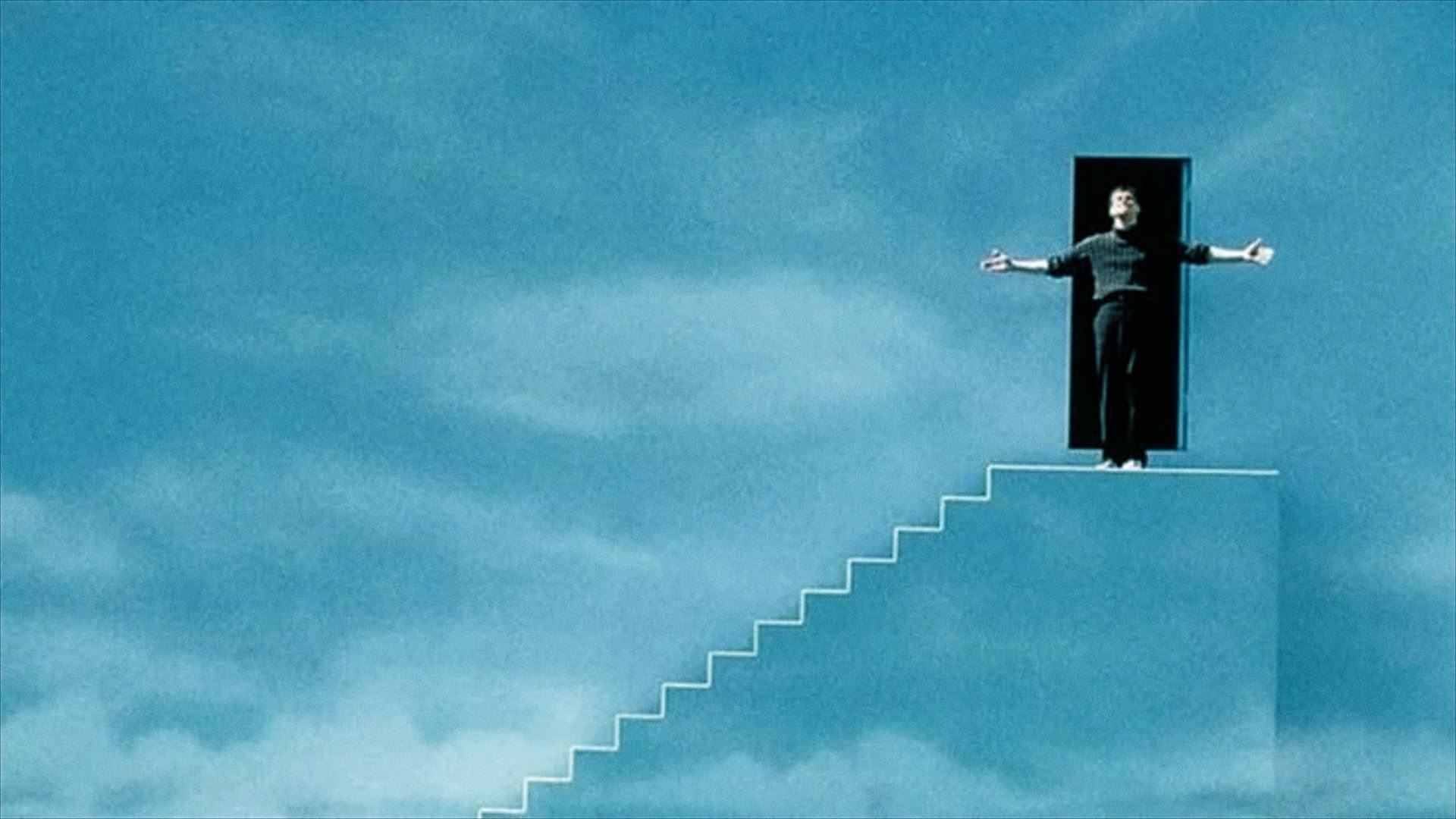
A bit like the end of The Truman Show: you simply walk through the door.
And I believe that's the biggest life upgrade you can make.
Have you been through these phases yourself?
Where are you right now: still adding, still subtracting, or finally aligning?

If you don’t know me yet, I’m Marine. I’m an ICF-certified coach and certified in Points of You®, working with people navigating life transitions. I help them reconnect with who they are, redefine their identity, and build meaningful projects through personal branding, marketing, and storytelling.